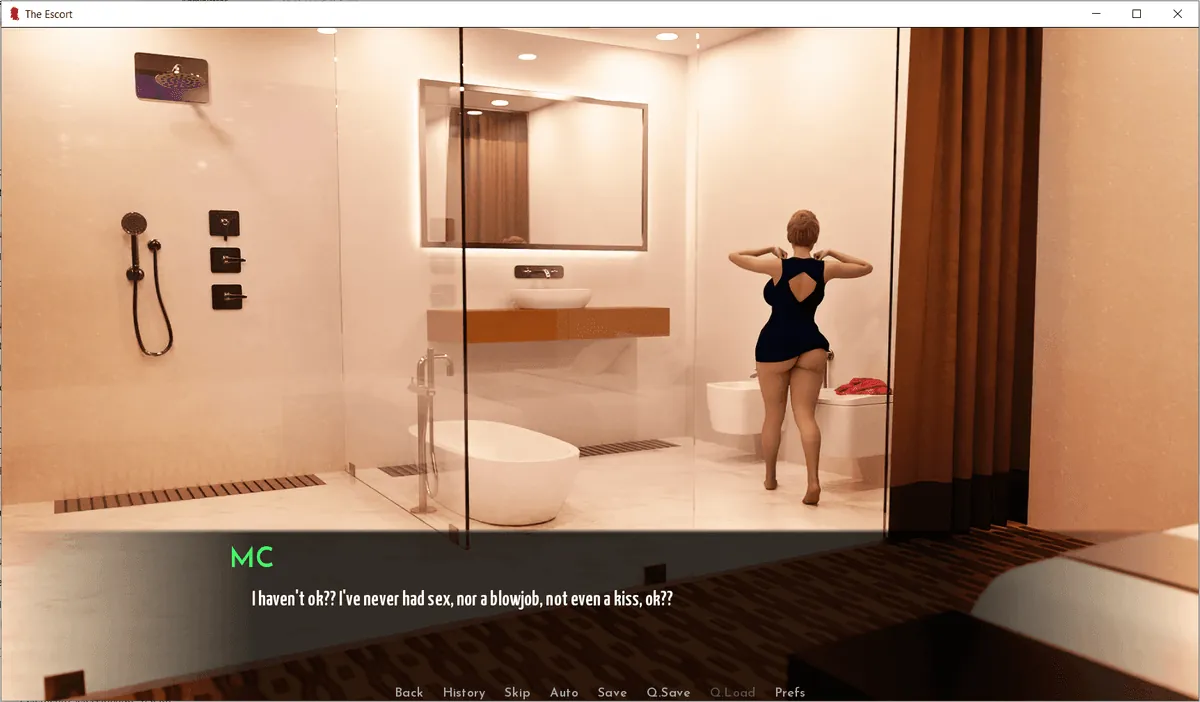
No More Money
Play No More Money
No More Money Screenshots
























No More Money review
Master gameplay mechanics, character interactions, and progression strategies
No More Money is an adult-oriented narrative game that follows a young protagonist facing financial hardship and family crisis. Players assume the role of the main character who must relocate to a new city and rebuild their life from scratch. The game combines relationship-building mechanics with life simulation elements, requiring strategic decision-making to navigate career choices, character interactions, and personal development. This guide provides essential information about game mechanics, progression systems, and optimal strategies to enhance your gameplay experience.
Understanding No More Money Game Mechanics and Core Systems
Ever found yourself staring at your bank account with that sinking feeling? 😅 Imagine that moment, but dialed up to eleven—your character in No More Money isn’t just having a bad month; they’re completely broke, forced to pack up and start from scratch in a new town. This life simulation game throws you into the deep end, and your only way out is to master its intricate systems. Forget just clicking through dialogue; here, every choice in the character interaction system and every hour spent on your career progression system genuinely shapes your digital life. This guide is your lifeline. We’re going to break down the core No More Money game mechanics, from building meaningful bonds to climbing out of debt, giving you the complete No More Money walkthrough for success.
Game Overview and Story Context
The premise of No More Money hits close to home for a reason. You’re not a hero destined to save the world; you’re someone who hit financial rock bottom. The game begins with your eviction, forcing a fresh start in a modest new apartment. This isn’t just a backdrop—it’s the engine for all the No More Money game mechanics that follow. Your past is a blank slate of bad decisions, and your future is a spreadsheet waiting to be filled.
I remember starting my first playthrough, feeling totally overwhelmed. The game (currently on a very robust version 4.1.0, a solid 1.1 GB of content) doesn’t hold your hand. You wake up that first virtual morning with a near-empty wallet and a silent phone. The goal is simple yet profound: rebuild. Build a life that’s stable, fulfilling, and hopefully, shared with others. This life simulation game excels at making you feel the weight of mundane choices. Should you spend your last bit of cash on a decent meal to boost your mood, or save it for a bus fare to a potential job? The story emerges from these tiny, cumulative decisions. It’s a sandbox of personal recovery, where the narrative is written by your daily routines, your conversations, and your perseverance.
Character Interaction and Relationship Building
This is where No More Money truly shines and diverges from simpler visual novels. The relationship building gameplay is deep, nuanced, and mirrors the awkward, rewarding process of making real connections. You’ll meet a cast of characters, each with their own schedules, personalities, and problems. Talking to them isn’t just about picking the “nice” option; it’s about understanding their current mood, their interests, and what they need from a friend (or more).
The core of the character interaction system is built on two pivotal metrics: Trust and Attraction. Think of Trust as the foundation of any relationship—it’s built through reliability, support, and shared experiences. Attraction is the spark, often fueled by shared interests, flirtatious banter, and personal chemistry. Crucially, these are not the same! You can have a trusted friend who sees you as a sibling, or feel a strong attraction with someone who doesn’t yet trust you enough to be vulnerable.
Pro Tip: Early on, I focused only on Attraction with one character, giving compliments and flirty gifts. It backfired spectacularly when she needed serious emotional support and my “trust score” was too low for her to confide in me. I was seen as superficial. Balance is everything.
Activities are your primary tool. Every character has traits—like “Athletic,” “Bookworm,” or “Gamer”—that determine which activities they enjoy. Inviting a bookish character to a noisy arcade might mildly increase Attraction but do little for Trust. However, spending a quiet afternoon chatting at a café could boost both. The game’s genius is that these traits can reset or change based on story events, keeping you on your toes and encouraging you to pay attention.
Here’s a quick list of key activities and how they generally influence the trust and attraction mechanics:
- Deep Conversation (Park, Café): 🗣️ Major boost to Trust. Small, situational boost to Attraction. The cornerstone for building a reliable connection.
- Shared Hobby (e.g., Gym, Library, Arcade): 🎯 If it matches their trait, gives a solid boost to both Trust and Attraction. Shows you have things in common.
- Giving Thoughtful Gifts: 🎁 A moderate boost to Attraction, with a smaller Trust increase. The gift must align with their taste! A generic gift has little effect.
- Providing Emotional Support: 🤝 Huge boost to Trust. This usually triggers during specific story moments when a character is in crisis. Often the fastest way to deepen a bond.
- Flirtatious Dialogue/Jokes: 😉 Directly targets Attraction. Use sparingly early on, as it can fall flat if Trust isn’t established.
Remember, their mood level is a hidden multiplier. A character stressed from work won’t receive the full benefits from any activity. Sometimes, the best “action” is to give them space or offer a simple, low-pressure hangout. This layered relationship building gameplay makes every interaction feel consequential.
Progression Systems and Resource Management
Your journey in No More Money is a constant juggling act between three resources: Money, Time, and Energy. Mastering this triad is the essence of the No More Money game mechanics for progression. You can’t have it all in one day. A high-paying overtime shift might drain your Energy, leaving you no capacity to socialize. Conversely, spending all day with characters leaves your wallet empty.
Your primary tool for managing this is your career. The career progression system offers four distinct paths, each with its own rhythm, risks, and rewards. Choosing one isn’t just about the paycheck; it defines your daily schedule, your stress levels, and how much free time you have for the character interaction system.
Let me share a case study from my playthroughs: I first chose the Part Timer path, lured by the flexible hours. It was great for socializing, but the inconsistent pay kept me in a constant state of financial anxiety, which actually negatively affected some dialogue options—my character was always subtly stressed. In my next attempt, I grinded as a Salaryman. The money was stable and good, but the long, fixed hours meant I missed key events with other characters, causing some relationships to stagnate.
Your career choice directly feeds into the life simulation game experience. Financial stability from your job unlocks better housing, nicer gifts, and the peace of mind to focus on relationships. Conversely, neglecting your career to chase romance can lead to a different kind of game over—another eviction notice.
Here is a comparison of the core career paths to help you strategize your No More Money walkthrough:
| Career Path | Income Type & Stability | Time Commitment | Progression Path & Notes |
|---|---|---|---|
| NEET 🛋️ | Very Low / Unstable (Odd jobs, gambling). High risk. | Very Flexible | Not a recommended primary path. Maximizes free time for social activities but creates constant financial pressure and negative story flags. |
| Daytrader 📈 | Variable / High Risk, High Potential. Market-dependent. | Flexible (Market Hours) | Requires save-scumming or real financial knowledge. Success unlocks massive wealth fast, failure leads to ruin. A rollercoaster choice. |
| Part Timer ☕ | Low to Moderate / Semi-Stable. Consistent but small paychecks. | Flexible (Choose shifts) | The “social” career. Best for players who want to prioritize relationship building gameplay. Progression means slightly better pay and shift priority. |
| Salaryman 💼 | High / Very Stable. Regular promotions and raises. | Inflexible (9-5+ routine) | The “financial security” career. Excellent for mastering the career progression system. Limits weekday socializing but provides resources for quality weekend time. |
Beyond your job, smart resource management means planning your week like a general. Use low-energy days for simple social calls or administrative tasks (paying bills). Schedule important, energy-consuming activities (like a big date or a job interview) after a good night’s sleep. The game’s activities reset character cooldowns and moods daily, so a failed interaction isn’t the end—just a lesson learned.
The beautiful synergy of No More Money game mechanics is that success in one area fuels another. A strong relationship might lead to a tip about a better job. A promotion at work gives you the confidence (and cash) to pursue the partner you really like. It’s a continuous, rewarding cycle of setting goals, managing resources, and living with the consequences. This depth is what makes No More Money more than a game—it’s a masterclass in virtual life strategy, and with this guide, you’re ready to not just play, but to truly thrive.
No More Money offers a unique blend of narrative-driven gameplay and relationship simulation mechanics that reward strategic decision-making. Understanding the core systems—from career management to character interaction dynamics—is essential for progressing through the game and unlocking all available content. Whether you’re focused on building specific relationships, optimizing your career path, or exploring the game’s various storylines, mastering these fundamental mechanics will significantly enhance your overall experience. Take time to experiment with different activity combinations and career choices to discover the gameplay approach that resonates most with your playstyle.